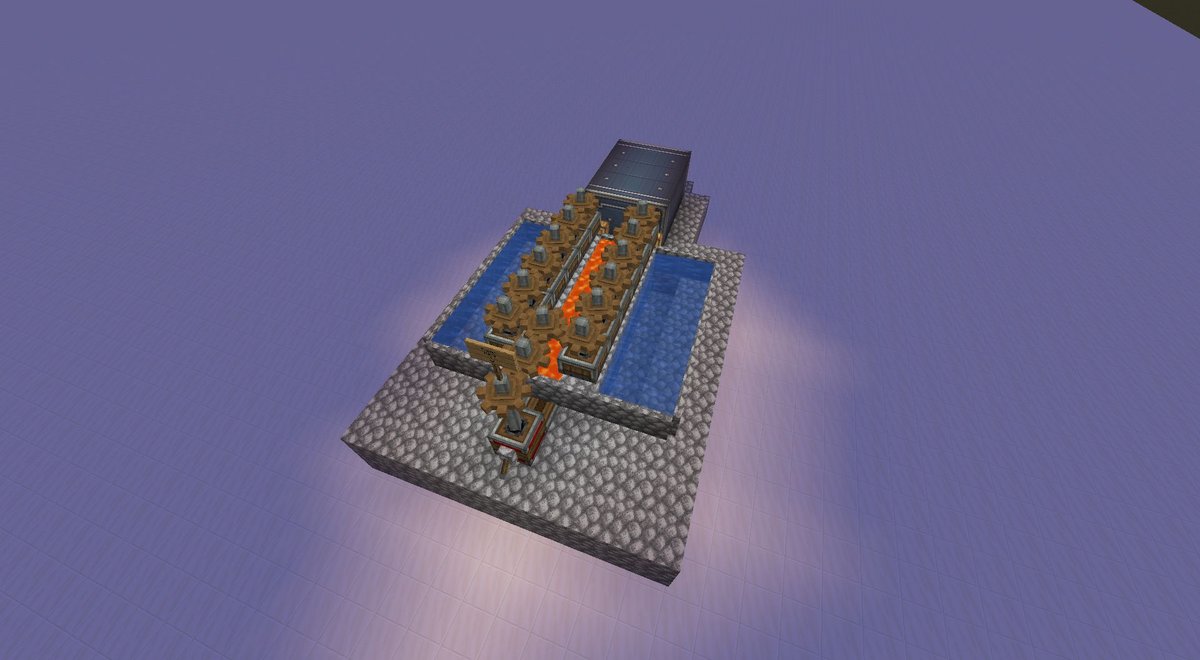
Navigating the vast, blocky world of Minecraft means constantly managing resources. Whether you’re building an epic castle, crafting essential tools, or fueling your furnaces, one block remains a foundational necessity: cobblestone. But mining stone repeatedly can be tedious. That’s where the humble, endlessly useful Basic Cobblestone Generator Designs (1x2, 1x3) come into play, offering an infinite supply with minimal effort. Think of it as your personal, always-on rock quarry, ensuring you never run out of this vital material.
These simple contraptions are a game-changer, particularly in early-game survival or skyblock challenges where resources are scarce. They empower you to focus on exploration, building, and adventuring, knowing your essential building blocks are taken care of.
At a Glance: Your Cobblestone Generator Essentials
- Endless Supply: Cobblestone generators produce an infinite amount of cobblestone by combining flowing lava and water.
- Simple Components: All you need is one bucket of lava and one bucket of water to get started.
- Core Principle: When water flows into lava, or lava flows into water (in a specific way), cobblestone is created.
- Compact Designs: The 1x2 and 1x3 designs are the most common and easiest to build, taking up minimal space.
- Versatile Resource: Cobblestone is crucial for tools, Redstone components, building blocks, and even decoration.
- Cost-Effective: Once built, it costs nothing to maintain, only your time to mine the generated blocks.
The Cornerstone of Minecraft: Why Cobblestone Matters
Before we dive into generating it, let's appreciate why cobblestone holds such a pivotal role in the Minecraft universe. It's not just another grey block; it's a fundamental building block that underpins much of your progress.
Cobblestone is the default block you get when you mine stone. Visually, it's distinct with its cracked, rough-hewn appearance, setting it apart from the smooth finish of raw stone. You'll find it naturally generated in various structures, but primarily, players obtain it by mining vast deposits of stone found underground or in mountains.
Crafting Life with Cobblestone
Few materials are as versatile. Cobblestone is directly or indirectly involved in crafting a staggering array of essential items across almost every game category. Without cobblestone, your Minecraft journey would be significantly harder, if not impossible.
Here's a glimpse of what you'll be crafting with an endless supply of cobblestone:
- Structural Materials: Cobblestone slabs, cobblestone walls, and by smelting it, the ever-useful smooth stone blocks for more refined builds.
- Tools & Weapons: Craft sturdy stone shovels, pickaxes, axes, hoes, and swords—all superior to their wooden counterparts and vital for early-game progression.
- Mechanisms & Automation: Power your Redstone contraptions with pistons, dispensers, observers, and even furnaces for smelting.
- Utility Blocks: Brewing stands for potion-making, and later, more advanced Redstone components like comparators and repeaters (after smelting into stone).
- Decorative Touches: Beyond its utilitarian nature, cobblestone, and its mossy variant (by combining with vines), serves as a robust and atmospheric building material for dungeons, castles, and rugged landscapes.
From basic shelter to complex automation, cobblestone is your go-to material. Having a reliable generator means you can stockpile it without the constant need to delve into dangerous caves, freeing up your time for more exciting endeavors.
The Magic Formula: Water Meets Lava
At its heart, a cobblestone generator is a simple natural reaction. When water flows into a block that is also being flowed into by lava, the game prioritizes cobblestone formation. This isn't just a quirky game mechanic; it's a cornerstone (pun intended!) of resource generation.
To build any basic generator, you only need two ingredients:
- 1x Water Bucket
- 1x Lava Bucket
The magic happens when these two elements meet. The goal is to arrange them so that they consistently flow into a single, designated spot where cobblestone will appear, ready for you to mine.
Unpacking Basic Cobblestone Generator Designs
While the Minecraft community has devised incredibly complex and automated generators over the years—from fully automated Redstone behemoths to high-speed contraptions that pump out blocks by the dozen—we're focusing on the absolute fundamentals. The "1x2" and "1x3" designs are the simplest, most space-efficient, and easiest to build, perfect for survival mode or beginners. They all generate cobblestone one block at a time, making them ideal for manual mining.
The numbers (1x2, 1x3) refer to the general footprint of the generator or, more specifically, the minimal length of the trench required for the water and lava to interact safely and consistently. They produce a single block of cobblestone at a time.
The Ultra-Compact 1x2 Cobblestone Generator
This is arguably the smallest and most straightforward design you can build. It's perfect for tight spaces, like a small survival base or even a skyblock island where every block counts.
How it Works: The 1x2 design relies on water flowing exactly one block before meeting lava.
Construction Steps (1x2 Design):
- Dig a Simple Trench: Start by digging a straight trench that is 1 block wide, 3 blocks long, and 1 block deep. It should look like this (from above):
[ ] [ ] [ ]
- (Side view):
|||_|
2. Place Water: At one end of your trench, place your water bucket. Let's say you place it in the rightmost block. The water will flow one block to the left.
[ ] [Water] [Source]->[Flow] [Water] [Source]- The second block from the right will now have flowing water.
- Place Lava: Now, go to the leftmost block of your trench (the one not yet touched by water). Place your lava bucket here.
[Lava Source] [ ] [Water Source]
- The Meeting Point: The lava will flow towards the water. The moment the flowing lava meets the flowing water in the middle block, a cobblestone block will form.
[Lava Source] [COBBLE] [Water Source]- The middle block is your endless cobblestone source!
- Mine and Repeat: Mine the cobblestone. A new block will instantly reappear in the same spot, ready for you to mine again.
Visualizing the 1x2 Trench:
(Top View, 1 block deep)
[LAVA] [COBBLE SPAWN] [WATER]
This compact design gets its "1x2" name because the active interaction area where water flows one block and lava flows one block to meet is effectively 1 block wide and 2 blocks long (excluding the source blocks themselves, or 3 blocks long if including the source blocks in a straight line). It's incredibly efficient in terms of space.
The Slightly Safer 1x3 Cobblestone Generator
The 1x3 design is a minor variation that offers a tiny bit more safety, especially for new players, by giving the water a slightly longer flow path before meeting the lava. This can help prevent accidental obsidian formation if you misplace a bucket or mine too quickly.
How it Works: Water flows two blocks before meeting the lava, creating a small buffer.
Construction Steps (1x3 Design):
- Dig a Longer Trench: Dig a trench that is 1 block wide, 4 blocks long, and 1 block deep.
[ ] [ ] [ ] [ ]
- Place Water: At one end, place your water bucket. Let's say the leftmost block. The water will flow two blocks to the right.
[Water Source] [Flow] [Flow] [ ]
- Place Lava: Now, at the rightmost block of your trench (the one not yet reached by water flow), place your lava bucket.
[Water Source] [Flow] [Flow] [Lava Source]
- The Reaction: The lava will flow towards the water. The cobblestone will form in the block where the water's flow would naturally end and meet the lava. This will be the third block from your water source (or the second block from your lava source).
[Water Source] [Flow] [COBBLE] [Lava Source]
- Mine Continuously: Just like the 1x2, mine the cobblestone, and it will regenerate instantly.
Visualizing the 1x3 Trench:
(Top View, 1 block deep)
[WATER] [FLOW] [COBBLE SPAWN] [LAVA]
This "1x3" refers to the length of the flow and generation area (1 block wide, 3 blocks long for the flowing water, cobblestone, and flowing lava). It simply provides an extra buffer block for the water flow, making it marginally less prone to error if you're quick-mining or experimenting.
Crucial Tips for Building Your Basic Generators
- Mind Your Source Blocks: Always ensure your water and lava buckets are placed as source blocks (still, non-flowing liquid) at the ends of your trench.
- Prevent Obsidian: Obsidian forms when a lava source block touches a water source block. The designs above ensure flowing water meets flowing lava (or flowing water meets a lava source), resulting in cobblestone. If you accidentally place lava next to a water source directly, you'll get obsidian, which is much harder to mine.
- Safety First: When mining, stand away from the lava source. You don't want to accidentally fall in or mine a block that causes you to take fire damage. Build a small wall around the lava if you're concerned.
- Pickaxe Power: Use a stone pickaxe or better for efficient mining. Wooden pickaxes are too slow. Iron or diamond pickaxes are, of course, faster.
- Light It Up: If building underground, ensure your generator area is well-lit to prevent hostile mobs from spawning.
Beyond the Basics: What Cobblestone Empowers
Once you have a reliable cobblestone generator, your world opens up significantly. You’re no longer limited by the stone you can find, but by the time you're willing to spend mining.
Fortifying Your World: Stone and Tool Weapons
Cobblestone is the backbone for early-game tools. Crafting stone shovels, axes, hoes, and swords from cobblestone means upgrading from flimsy wooden tools to much more durable and effective ones. This speeds up resource gathering and makes combat significantly safer.
Its high blast resistance also makes it an excellent material for defensive structures. When you're brave enough to venture into the Nether, building bridges and safe passages with cobblestone is a smart move. It offers considerable protection against the explosive fireballs of Ghasts, keeping you (and your precious items) intact.
Powering Innovation: Redstone Components
As you progress, Redstone becomes central to automation and complex contraptions. Many fundamental Redstone components rely on cobblestone (or its refined form, stone). Levers, observers, pistons, and dispensers all require cobblestone in their crafting recipes. Want to brew potions? You'll need a brewing stand, which also requires cobblestone.
Smelting cobblestone into smooth stone blocks in a furnace is also essential. Smooth stone is then used to craft advanced Redstone components like comparators and repeaters, which are critical for timing and logic in complex Redstone builds. Your basic generator provides the raw material for this entire automation pipeline.
Architectural Versatility: Different Building Blocks
Cobblestone isn't just about utility; it's a fundamental aesthetic. Its rugged texture is perfect for creating rustic castles, ancient ruins, or dungeon-like structures. And its versatility doesn't stop there. With cobblestone, you can craft:
- Cobblestone Stairs and Slabs: Essential for adding depth, detail, and functionality (like half-block spacing) to your builds.
- Cobblestone Walls: Great for fences, decorative borders, or adding a medieval touch.
- Mossy Cobblestone: Combine cobblestone with vines in a crafting grid to get mossy cobblestone, perfect for creating overgrown, ancient, or natural-looking builds. This block truly elevates your decorative capabilities.
Beyond these specific uses, simply having a vast supply of durable, blast-resistant building blocks means you can build anything your imagination desires, from simple shelters to sprawling fortresses, all with the confidence that you won't run out of your primary material.
Common Questions and Troubleshooting for Cobblestone Generators
Even with basic designs, a few common questions or issues can arise.
Why am I getting obsidian instead of cobblestone?
This is the most common issue! Obsidian forms when a lava source block touches a water source block. Your basic generator designs are engineered so that flowing water meets flowing lava (or flowing water meets a lava source block in a specific way).
Solution: Double-check your placement. Ensure your water source is at one end of the trench and your lava source is at the other, allowing them to flow into each other in the middle. Do not place a lava source block directly adjacent to a water source block.
My generator isn't making anything, or it's making stone. What gives?
If nothing is generating, one of the liquids might not be flowing properly, or you might have a block obstructing the flow. If it's generating smooth stone, you've likely configured it to produce stone (usually by placing a lava source above a water source in a specific setup), which isn't the goal for a basic cobblestone generator.
Solution:
- Cobblestone: Ensure water and lava are flowing horizontally into the same block.
- Flow Check: Break any blocks around your trench to ensure no stray block is stopping the water or lava from flowing correctly.
- Source Blocks: Make sure both your lava and water are actual source blocks, not just flowing liquid from a distant source.
Can I build more than one generator?
Absolutely! Many players build multiple simple generators side-by-side or in different locations. This is especially useful in multiplayer settings or if you need to manually mine a lot of cobblestone. You can even create a small "farm" of several 1x2 or 1x3 generators.
Does the height of the water/lava matter for basic generators?
For these basic 1x2 and 1x3 horizontal designs, both water and lava are typically placed on the same level, one block deep. While there are vertical generator designs where lava flows down onto water, for the basic horizontal trench models, keeping them on the same plane (just separated by the generation point) is key.
Your Endless Supply Awaits
The beauty of the basic cobblestone generator lies in its simplicity and efficiency. With just a bucket of water and a bucket of lava, you unlock an endless supply of one of Minecraft’s most essential resources. These 1x2 and 1x3 designs are not just clever tricks; they're foundational tools that empower you to build bigger, craft more, and explore further without the constant grind of searching for stone.
So, gather your buckets, dig your trench, and prepare to wave goodbye to your cobblestone shortages. Your next grand construction project or Redstone masterpiece is now within reach, fueled by the reliable, infinitely regenerating power of your very own basic cobblestone generator. Happy crafting!