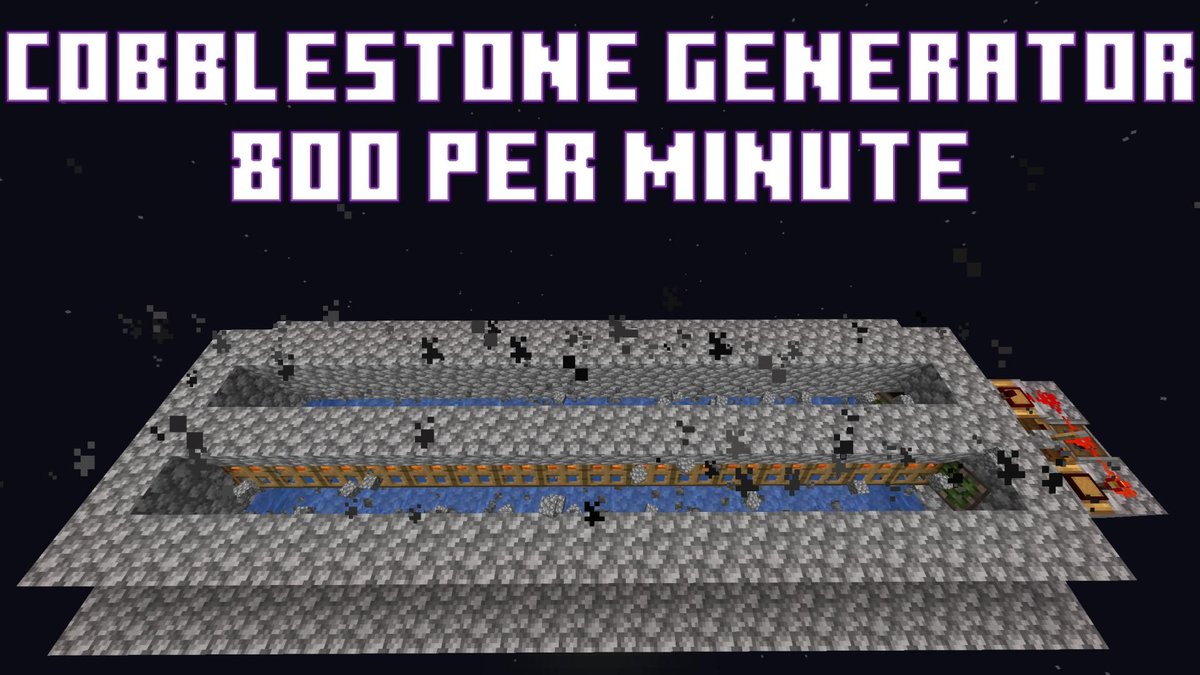
In the sprawling, blocky world of Minecraft, resources are the lifeblood of every endeavor. From building grand castles to powering intricate Redstone contraptions, access to materials is paramount. This is where the often-underestimated cobblestone generator steps in, offering an ingenious solution to scarcity. Far more than just a simple contraption, understanding the Benefits & Practical Uses of a Cobblestone Generator unlocks an infinite wellspring of one of Minecraft's most versatile and essential building blocks.
It’s the ultimate resource hack, a foundational piece of automation that can transform your gameplay experience, saving you countless hours of mining and opening up new avenues for creativity and efficiency.
At a Glance: Your Infinite Cobblestone Advantage
- Unlimited Supply: Generates cobblestone perpetually from just a few buckets of lava and water.
- Time & Effort Saver: Drastically reduces the need for manual mining expeditions.
- Versatile Material: Essential for construction, crafting, farming, and Redstone.
- Early Game Lifeline: Crucial for survival maps like Skyblock, providing core materials from the start.
- Automated Potential: Can be scaled from simple manual designs to fully automated factories.
- XP Farming: Efficiently mining generated blocks is a consistent source of experience points.
The Unsung Hero: What Exactly is a Cobblestone Generator?
At its heart, a Minecraft cobblestone generator is a controlled interaction between two fundamental elements: flowing water and flowing lava. When these two liquids meet under specific conditions, they don't simply evaporate or mix; they create solid blocks. The magic lies in the precise arrangement that forces this interaction to continually produce cobblestone.
Think of it as a natural alchemist's lab, powered by the game's physics. While flowing water over still lava yields obsidian, and flowing lava touching still water gives you stone blocks, it's the specific setup where both flowing lava and flowing water meet that reliably produces cobblestone. With a Silk Touch pickaxe, you can collect the generated stone blocks, or use a Fortune pickaxe on cobblestone to maximize your yield. It’s an elegant, simple system with profound implications for resource management.
Why Every Minecrafter Needs an Infinite Cobblestone Supply
Beyond the sheer convenience, integrating a cobblestone generator into your world offers a cascade of benefits that impact almost every aspect of your Minecraft journey.
Unshackling from Scarcity: Time-Saving & Resource Independence
Imagine never having to venture deep into dangerous caves solely for building materials again. A cobblestone generator liberates you from this grind. Instead of spending precious time digging, you can dedicate it to exploration, complex builds, or challenging boss fights. This independence means you're no longer limited by the finite resources of your immediate surroundings, fostering true self-sufficiency in your world.
The Backbone of Industry: Versatility in Building and Crafting
Cobblestone is the workhorse of Minecraft. It's not flashy, but its utility is unmatched. You'll use it to:
- Craft Essentials: Furnaces, stone tools, stone weapons, droppers, dispensers, pistons, and observers all require cobblestone (or its processed forms). Your infinite supply means you can craft these vital items on demand.
- Foundation for Structures: From basic shelters to elaborate bases, cobblestone offers a durable, blast-resistant material for walls, floors, and foundations. Its ability to withstand TNT blasts makes it excellent for protecting vulnerable areas.
- Terrain Manipulation: Need to fill a chasm? Raise a platform over water? Cobblestone is cheap and plentiful for large-scale terraforming projects.
Powering Progress: Foundation for Redstone Automation
Redstone engineering, the art of creating complex machinery in Minecraft, often requires a sturdy, non-flammable base. Cobblestone fits this bill perfectly. Its neutral color also helps redstone components stand out, making troubleshooting easier. An infinite supply means you can experiment with elaborate Redstone contraptions without worrying about material costs. Whether you're building automatic farms or sorting systems, cobblestone serves as a reliable backdrop. To truly elevate your automated endeavors, you'll want to dive deeper into Redstone essentials and understand how to integrate these generators seamlessly.
The Lifeline of Skyblock: Survival & Early Game Essential
For challenges like Skyblock, where you start on a tiny island with minimal resources, a cobblestone generator isn't just useful—it's absolutely indispensable. It's often the first major structure you build, providing the very blocks needed to expand your island, create tools, and kickstart your entire survival operation. Without it, expanding and progressing would be nearly impossible. It epitomizes the "make do with what you have" spirit of these survival maps.
Beyond Building: Experience Point Farming
Every block you mine from a cobblestone generator, especially with the right setup, grants a small amount of experience. Over time, this can accumulate into a significant source of XP, allowing you to enchant tools, armor, and weapons without having to hunt mobs or smelt vast quantities of ore.
Choosing Your Infinite Quarry: A Look at Generator Designs
Cobblestone generators come in various forms, each offering different levels of complexity, automation, and material output. Your choice will depend on your current resources, technical skill, and desired outcome. If you're ready to get your hands dirty, you can always craft a Minecraft cobblestone generator with detailed instructions after exploring these options.
The Bare Essentials: Simple Cobblestone Generators
This is the bread-and-butter design, perfect for beginners or those playing on resource-scarce maps like Skyblock. It's incredibly cheap to build and requires minimal technical know-how.
- Concept: A basic setup where flowing water and lava meet to create a single block of cobblestone, ready for manual mining.
- Resources: Just one water bucket (or an ice block) and one lava bucket. That's it!
- Practical Use: Ideal for initial resource generation in a new world, establishing your first tools, or expanding a small base. It’s your immediate solution for getting started when essential early-game survival tips are crucial.
- Efficiency: Low block output per minute, as it requires constant player interaction, but unparalleled for its simplicity and low entry barrier.
Stepping Up: The Popular Design with Collection Systems
Once you're past the initial scramble for resources, you'll likely want to automate collection. This popular design incorporates hoppers and chests, turning your manual mining into a more streamlined process.
- Concept: Similar to the simple generator, but strategically placed hoppers collect the mined blocks and deposit them directly into chests. This often generates stone which can then be smelted or mined with Fortune for cobblestone.
- Resources: A couple of water buckets, a lava bucket, several hoppers, chests, and some non-flammable blocks (like cobblestone itself or stone bricks) for containment. Stairs are often used to guide water flow effectively.
- Practical Use: Great for mid-game players looking to accumulate large quantities of stone or cobblestone without constantly moving items to storage. This setup allows you to mine continuously without worrying about your inventory filling up, letting you focus on other tasks like mastering basic Minecraft building techniques.
- Efficiency: Higher, as collection is automatic, but still relies on manual mining of the generated block.
Automating Movement: Piston-Based Generators
For those ready to delve into basic Redstone, piston-based generators add a layer of automation by pushing generated blocks away, creating a long line of material ready for collection or further processing.
- Concept: Uses pistons, powered by Redstone, to push freshly generated cobblestone blocks into a long row. This allows for more continuous mining or for setting up a larger collection area.
- Resources: Water buckets, lava buckets, a significant number of pistons, Redstone dust, repeaters, and torches for the power circuit. Inflammable solid blocks are crucial for the structure.
- Practical Use: Excellent for building large-scale foundations, creating walls, or feeding materials into other Redstone contraptions. It's a stepping stone towards fully automated systems, perfect for when you need a consistent flow of blocks rather than just a single point of generation.
- Efficiency: Moderately high, as blocks are continuously presented to the player or a collection system, though still requiring manual mining or a more advanced breaking mechanism. One common pitfall is pistons reaching their push limit (12 blocks), which can halt the system if not managed.
The Ultimate Factory: Fully Automated Generators
For the truly ambitious Minecrafter, a fully automated cobblestone generator is an engineering marvel. These contraptions not only generate blocks but also break and collect them using a combination of complex Redstone, TNT dupers, and precise timing.
- Concept: A highly sophisticated system that makes, breaks (often using TNT generated by a duper), and collects cobblestone without any player interaction. It's an autonomous block factory.
- Key Components: Involves multiple regular and sticky pistons, observers, Redstone dust and repeaters, a TNT duper (often incorporating slime blocks, obsidian, and specific rail/minecart setups), and an Etho hopper clock for precise timing. A robust collection system with water flows and chained hoppers leading to vast storage is also vital.
- Practical Use: Ideal for late-game players needing truly enormous quantities of cobblestone for massive projects, terraforming entire chunks, or industrial-scale sustainable farms. It's an investment in complexity that pays dividends in sheer volume.
- Efficiency: Extremely high, providing an unparalleled rate of cobblestone generation and collection. However, they are resource-heavy to build and require a deep understanding of Redstone to construct and troubleshoot. Be mindful of piston push limits and potential lava deletion if the system malfunctions; levers to deactivate key components are essential.
Platform Specifics: Simple Automatic Cobblestone Generator for Minecraft Bedrock
While many designs are cross-compatible, some Bedrock Edition players benefit from specific layouts optimized for that version's unique mechanics, particularly for simple automatic collection.
- Concept: A compact design that generates cobblestone directly into a collection system, often using a minecart with hopper under the generation point.
- Materials: Hoppers, stairs, water and lava buckets, glass blocks, chests, rails, a minecart with hopper, a slab, and solid blocks for the structure.
- Key Steps: Typically involves digging a specific 3-block area, setting up a double chest with a hopper feeding into it, and then using rails to precisely position a minecart with hopper directly beneath where cobblestone generates. Glass and slabs are often employed for compact water and lava containment.
- Practical Use: An excellent way for Bedrock players to get reliable, hands-off cobblestone collection in the early to mid-game without needing complex Redstone. It bridges the gap between manual and piston-based systems.
- Compatibility: While the core principle works across versions, the precise layout for automatic collection with minecarts can differ slightly between Bedrock and Java editions.
Maximizing Your Cobblestone Output: Tips and Tricks
Building the generator is just the first step. To truly harness its power, consider these tips:
- Smart Mining Techniques:
- Continuous Mining: For manual generators, simply stand in the designated spot and hold down your mining button. The blocks will instantly reappear, allowing for uninterrupted collection.
- Pickaxe Choice: Use a Fortune III pickaxe to maximize cobblestone drops per block. If you need stone blocks directly, use a Silk Touch pickaxe.
- Efficiency Enchantments: An Efficiency V pickaxe will dramatically speed up mining, increasing your hourly yield significantly.
- Troubleshooting Common Issues:
- No Cobblestone Generating: Double-check your water and lava placement. Ensure both are flowing (not still source blocks) and meeting in the correct configuration. Sometimes a minor block misplacement can disrupt the flow.
- Slow Generation: Ensure your mining isn't too fast for the game's block update rate. Sometimes a brief pause or moving slightly and returning can "reset" the generation. For automated systems, ensure Redstone timing is correct.
- Lava Disappearing: This is a critical issue, often in automated piston-based generators. If a piston pushes a block into the lava source block, or if generated blocks don't get cleared quickly enough, the lava source can be destroyed. Implement levers to stop the machine if needed, or ensure reliable block breaking/pushing.
- Scaling for Speed:
- Multiple Modules: For higher output, build several simple or popular generators side-by-side.
- Optimized Redstone: For piston-based systems, fine-tune your Redstone clock to match your mining speed or the capacity of your collection system.
- Automated Breaking: If you're going for fully automatic, ensure your TNT duper and explosion chamber are designed to break blocks efficiently without destroying valuable components or generating excessive lag.
Beyond the Basics: Creative & Advanced Uses for Cobblestone
While its raw utility is undeniable, cobblestone and its derivatives (like stone bricks, polished stone, and mossy cobblestone) also shine in creative applications.
- Architectural Diversity: Cobblestone provides a rugged, rustic aesthetic perfect for farm buildings, stables, castle walls, and dungeon-like structures. Combining it with wood, other stone types, or even deepslate can create visually rich textures and patterns. Imagine a sturdy barn on your farm, its walls crafted from durable cobblestone, providing protection for your animals and a charming, rustic appeal.
- Redstone Foundations: Its non-flammable and blast-resistant properties make it the perfect material for enclosing sensitive Redstone circuitry, protecting it from accidental explosions or mob griefing. Its plain texture helps visual clarity for complex Redstone arrays.
- Blast Resistance and Defense: In multiplayer servers, cobblestone can be a cheap and effective material for constructing blast-resistant walls around your base. While not as strong as obsidian, its infinite supply makes it a practical choice for large-scale defenses against TNT griefing.
- Pathways and Infrastructure: Whether you're building roads, bridges, or pathways through your world, cobblestone provides a readily available, durable surface. Turn it into stairs and slabs for varied textures and more intricate designs.
Your Cobblestone Generator FAQs Answered
You've got questions, we've got answers. Here are some common queries about cobblestone generators:
Q: Can I use any type of slab in my generator design?
A: You can use any non-flammable slab, such as stone slabs, cobblestone slabs, or deepslate slabs. Avoid wooden slabs, as they can burn if they come into contact with lava.
Q: How do I collect the generated cobblestone?
A: For manual generators, you simply mine the block as it appears. For designs with collection systems, the generated (and often mined) blocks will flow into hoppers, which then deposit them into chests. Open the chest to retrieve your materials.
Q: Do these generator designs work in both Minecraft Java and Bedrock Editions?
A: The core principle of lava and water interaction is consistent across both versions, so simple generators will work universally. However, specific Redstone timings, piston mechanics, and especially advanced collection systems (like those involving minecarts with hoppers) can have subtle differences. Always check for version-specific tweaks if a complex design isn't working as expected.
Q: How can I increase the rate at which my generator produces cobblestone?
A: You have a few options: expand the generator's size by creating multiple water and lava source pairs, optimize your mining technique with Efficiency V pickaxes, or, for fully automated systems, fine-tune your Redstone clock and breaking mechanism for faster cycles.
Q: What are some creative uses for cobblestone beyond basic building?
A: Cobblestone is fantastic for giving structures a rugged, rustic feel, like farmhouses or castle ruins. It serves as an excellent, non-flammable base for Redstone contraptions, where its neutral color helps circuitry stand out. It's also a primary ingredient for crafting furnaces, dispensers, and stone tools, making it invaluable for any player.
Building Your Infinite Future: The Next Steps
A cobblestone generator is more than just a convenient tool; it's a statement of self-sufficiency and a gateway to larger, more ambitious projects. By providing an endless supply of a fundamental resource, it frees you from the drudgery of constant mining and empowers you to focus on the creative and exploratory aspects of Minecraft.
Whether you're starting a new Skyblock adventure, designing your first automated farm, or planning a colossal build, mastering the creation and utilization of a cobblestone generator is an invaluable skill. Choose the design that fits your current needs and resources, then refine it as your empire grows. The infinite possibilities of Minecraft truly begin when your material supply becomes limitless.