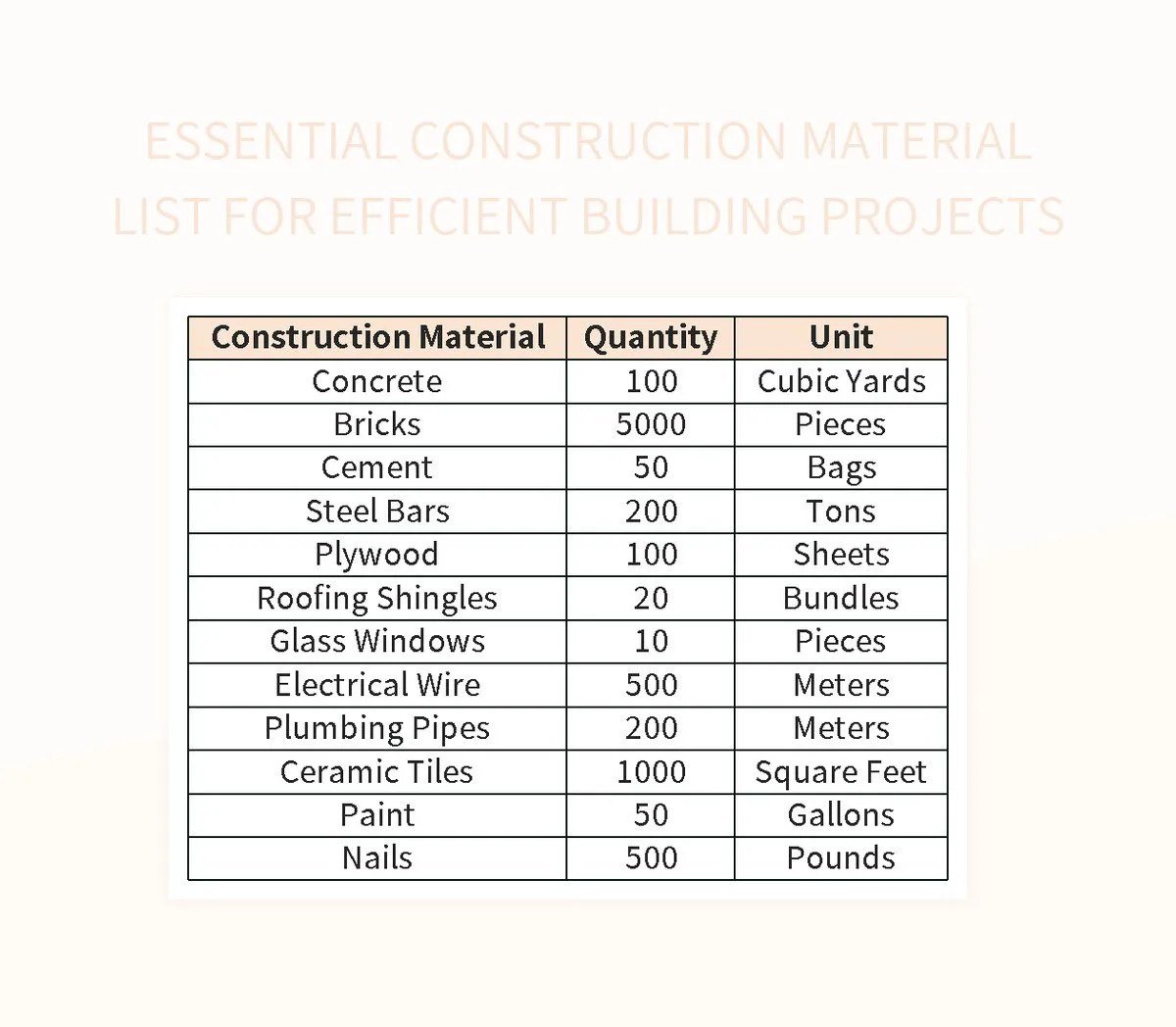
Getting any construction project off the ground, whether it’s a towering skyscraper or a simple home renovation, hinges on two fundamental pillars: the right materials and the right tools. For building industry professionals, understanding the intricate relationship between these essentials isn't just about efficiency; it's about delivering quality, ensuring safety, and building a reputation. This isn't just a list; it's your definitive guide to the Essential Materials & Tools for Construction, curated to empower you with the knowledge to make smart decisions on every job site.
Consider your toolkit and material choices as an extension of your expertise. They define your capacity to innovate, adapt, and overcome the myriad challenges inherent in construction. From the brute force of demolition to the surgical precision of finishing work, every task demands a specific solution. And in an industry constantly evolving, staying informed about the latest equipment and best practices is non-negotiable.
At a Glance: Your Toolkit for Success
- Diverse Tool Categories: Understand the strengths of hand tools, power tools, machine tools, and the strategic advantages of rental equipment.
- Task-Specific Essentials: Equip yourself with the right hammers, drills, saws, and specialized gear for every phase of construction, from site prep to electrical finishes.
- Prioritize Safety Gear: Hardhats, eye protection, and gloves are non-negotiable for every worker, every day.
- Precision is Power: Utilize measuring tapes, levels, and multimeters for accurate work and problem-solving.
- Smart Storage & Organization: Keep your site tidy, efficient, and secure with toolboxes, belts, workbenches, and rolling carts.
- Power Up: Don't overlook the importance of reliable power sources like generators, extension cords, and rechargeable batteries.
- Maintenance Matters: Proper care extends the life of your investment and ensures tools perform optimally.
The Foundation of Success: Why the Right Tools Matter
In construction, a hammer isn't just a hammer, and a drill isn't just a drill. Each instrument is a specialized piece of engineering designed to execute a specific task with maximum effectiveness. For seasoned pros, selecting the optimal tool translates directly into saved time, reduced effort, higher quality output, and, most importantly, enhanced safety. Imagine trying to precisely cut intricate tile designs with a blunt hand saw, or compacting a vast foundation by hand – the inefficiencies would be catastrophic.
The right materials, similarly, aren't just commodities. They are the backbone of your structure, dictating its strength, longevity, and aesthetic appeal. Understanding their properties, how they interact with different tools, and their application limitations is crucial for project success and client satisfaction.
Decoding Construction Tools: A Professional's Taxonomy
The world of construction tools is vast, but it can be neatly categorized to help you understand their purpose and application.
Hand Tools: The Unsung Heroes of Precision
These are the workhorses, powered by human muscle and often crucial for detailed work, tight spaces, or when electricity isn't available. Think screwdrivers for electrical enclosures, brushes for applying finishes, trowels for masonry, or wrenches for plumbing. Their simplicity belies their critical role in almost every trade.
Power Tools: Amplifying Human Effort
Stepping up from hand tools, power tools harness electricity, compressed air, or fuel to multiply your output. They come in two main flavors:
- Stationary Power Tools: Offering immense speed and accuracy, these typically remain in one spot. Think a table saw in a workshop, ideal for repetitive, precise cuts.
- Portable Power Tools: Designed for mobility and on-site flexibility, like a cordless drill or a circular saw. They bring the power directly to the work.
Machine Tools: Industrial-Scale Craftsmanship
These are typically larger, more specialized machines that cut, bore, or grind materials with significant power, often seen in manufacturing settings or for heavy fabrication. While not always directly on a small construction site, components created by machine tools are vital to structures.
Generic Tools: The Ever-Present Essentials
Some tools transcend specific trades. A shovel for digging trenches, a hammer for driving nails, a wheelbarrow for moving materials – these common items are foundational to virtually all construction processes.
Rental Equipment: Strategic Access to Specialized Power
For those projects requiring specialized or heavy machinery that you don't use daily, rental equipment offers a cost-effective solution. From massive excavators to large concrete pumps, renting provides access to high-value assets without the burdens of ownership, maintenance, or storage. It’s a smart way to scale your capabilities on demand.
On the Job Site: Essential Tools & Equipment by Task
Let's break down the core tools you'll rely on, categorized by their primary function on a busy construction site.
Breaking Ground & Demolition
When it's time to clear the old or prepare for the new, these tools deliver the necessary force.
- Claw Hammer: The ubiquitous choice. Its claw isn't just for pulling nails; a framing claw hammer (up to 32 oz with a checker pattern nose) offers extra grip and striking power for carpentry.
- Brick Hammer (Stonemason's Hammer): With a flat, square nose and a pick tail, this is your go-to for scoring and breaking bricks, cinder blocks, and smaller stone pieces with precision.
- Sledgehammer: The king of demolition. Its heavy metal head and long handle (requiring two hands) are designed to smash concrete, push walls, or drive stakes. Always pair with safety goggles, protective clothing, helmets, and gloves.
- Crowbar (Pry Bar): A versatile lever for separating objects, pulling stubborn nails, or prying apart larger elements during demolition. Lighter titanium versions exist for specialized work.
- Jackhammer: When brute force meets hard surfaces, the jackhammer reigns supreme. This electrical, T-shaped tool rapidly chips away at concrete or rock. Two-hand operation, ear protection, and a reliable power source (generator or outlet) are essential.
- Pickaxe: The hard-pointed edges perpendicular to its handle make this tool perfect for breaking up hardened earth, stone, or concrete surfaces where a sledgehammer might be overkill or less precise.
- Bolster: Used in conjunction with hammers or mallets, this wedged hand tool with beveled edges helps break hard materials like stone and brick, and clears mortar or grout with controlled impact.
Precision & Fastening
Securing components and creating openings requires accuracy and power.
- Drill Driver: The fundamental tool for rotating a drill bit to create holes in wood, metal, and plastic, and for securing fasteners. Look for good torque control.
- Hammer Drill (Hammer Drill Driver): Your best friend for masonry. It combines rotary drilling with a percussive "hammer" action to chip away at concrete or rock. Crucially, this hammer function can often be turned off for standard drilling.
- Rotary Hammer (Combination Hammer): A step up from the hammer drill, offering a more powerful percussive mechanism. It’s effective for heavier-duty drilling into concrete, brick, or stone, and can even take on light demolition tasks, similar to a smaller jackhammer.
- Cordless Drill (often "Screw Guns" for drywallers): Mobility is key. Drywallers rely on these for their excellent torque control when fastening drywall. Modern battery technology makes them incredibly powerful and reliable.
- Screwdriver Set: An absolute essential for electrical, plumbing, and framing work. Ensure you have Philips head, flathead, Torx, and Robertson types in various sizes. High-quality steel with long shanks and comfortable, resistant handles are worth the investment.
- Nail Gun: Dramatically speeds up framing and other nailing tasks, especially in residential construction. Training on trigger mechanisms and proper safety gear (goggles, hard hats, earplugs) are paramount.
- Impact Drivers: Delivering a powerful, sudden downward force with a rotational spin, impact drivers are exceptional for driving screws and fasteners instantly, especially through tough materials, often outperforming standard drills for this specific task.
Cutting, Shaping & Finishing
From rough cuts to detailed shaping, these tools define the form and finish of your project.
- Jab Saw: A specialist's tool for making precise, clean holes in drywall for outlets, pipes, or light fixtures.
- Circular Saw: A versatile power tool for straight cuts in various materials. Interchangeable blades are key: specific blades for wood, metal, or masonry. Safety guards and proper technique are critical.
- Reciprocating Saw (Saber Saw, Jigsaw): The demolition artist. Its back-and-forth blade motion makes it ideal for quick, rough cuts in awkward angles or tight spaces, especially during teardowns. Its high maneuverability is a major advantage.
- Wall Chaser: A more specialized tool for cutting precise channels in walls – essential for embedding electrical conduits, plumbing pipes, or HVAC lines.
- Oscillating Tool: The multi-tool marvel. With various attachments, it can sand, scrape, and cut wood, metal, plastic, and even grout, making it incredibly versatile for detail work and difficult angles.
- Grinders:
- Angle Grinders: Indispensable for fitting material ends, grinding down weld seams, polishing, and sanding both flat and angled surfaces.
- Surface Grinders: Used for achieving specific, high-precision surface finishes on metals like cast iron, steel, or aluminum.
- Die Grinders: Smaller, more precise grinders for intricate sanding and polishing tasks.
- Metal Shears Attachment: A handy attachment for your drill or impact driver that makes quick work of cutting sheet metal, corrugated roofing, or ducting.
- Chisel: While often associated with woodworking for smoothing surfaces or shaping joints, heavy-duty chisels are also crucial in concrete work for removing excess material or breaking small sections.
- Tile Cutter: Simplifies tile installation by allowing for clean, straight cuts, ensuring a perfect fit around frames, shafts, or irregular wall sections. A precise score and a mechanical break are the secrets to its effectiveness.
- Concrete Sander: After pouring and initial leveling, a concrete sander with its durable, robust sanding surfaces ensures a smooth, finished surface that's ready for its next treatment.
Masonry & Concrete Mastery
These tools are specifically designed to handle the unique demands of working with stone, brick, and concrete.
- Ground Auger: Saves immense time and effort when digging holes for fence posts, footings, or planting. It extracts dirt far more efficiently than a shovel.
- Drywall Knives: A set is essential: 4-inch and 6-inch blades for mud application and taping, and a 12-inch blade for feathering and achieving that smooth, finished look.
- Portable Concrete Mixer: For smaller jobs or remote sites, a portable mixer ensures you can mix fresh concrete on demand from cement, aggregate, and water. Always wear protective gear to prevent splatter injuries.
- Sand Screening Machine: Ensures the quality of your concrete by removing unwanted debris like rocks, branches, and stones from natural sand before mixing.
- Screed: After pouring, the screed is crucial for leveling and removing excess concrete material, ensuring an even and consistent surface. Wider screeds are often preferred for efficiency.
- Floats: Used after screeding to eliminate ridges, fill holes, and smooth the concrete surface, allowing bleed water to escape. Wooden floats are traditional, but aluminum or magnesium (which won't drag the concrete as much) are often preferred for professional finishes. Bull floats are for large areas, while hand floats or darbies handle smaller sections.
- Rammer (Hand Rammer Tool): A simple but effective hand tool for compacting layers of soil or aggregate, removing air gaps, and creating a stable base for foundations.
- Plate Compactor: For larger areas, this power tool mirrors the hand rammer's function, compacting soil with a vibrating bottom plate, making it far more efficient for extensive ground preparation.
- Trowel: The iconic masonry tool. Masonry trowels apply and shape mortar, while flat trowels are used to level and smooth freshly poured concrete. Seek out rust-resistant, easy-to-clean options with comfortable, sturdy handles.
Plumbing, Electrical & HVAC Necessities
Specialized tools are vital for installing and maintaining a building's critical infrastructure.
- Pliers: A diverse family of hand tools. You'll need various types for cutting wires, bending, crimping connections, holding small objects, and squeezing. For electrical work, insulated handles are non-negotiable. Diagonal or side-cutter pliers are standard for cutting wires.
- Tie Tensioning Tool: Essential for securing and precisely tensioning plastic ties used in HVAC ducting and electrical cable management, ensuring a neat and secure installation.
- Spud Wrench (Construction Wrench): A critical tool for ironworkers, used for aligning bolt holes in girders and beams, often with a tapered handle for leverage.
- Adjustable Wrench (Adjustable Spanner): The versatile utility player whose adjustable jaw can fit a range of nut sizes. While convenient, remember it provides less torque than a fixed wrench.
- Set of Fixed Wrenches: For serious torque and durability, nothing beats a set of fixed wrenches (open, ring, ratchets, Torx) made from chrome or stainless steel. They are indispensable for turning nuts, bolts, and other rotary fasteners.
- Caulk Guns (Skeleton Guns): Whether battery-powered or pressure-powered, these deposit silicone or latex sealants to bond materials, fill gaps, and weatherproof connections in metal, ceramic, or glass.
- Voltage Checker: A basic, invaluable handheld sensor that quickly confirms the presence of electrical current in outlets or devices, a first line of defense for electrical safety.
- Multimeters: For more detailed electrical diagnostics, a multimeter measures voltage, current, and resistance in a variety of devices, from batteries to major appliances.
Site Prep & Material Handling
Getting organized, moving materials, and setting the stage efficiently saves significant time and effort.
- Shovel: A fundamental digging and material-moving tool. Steel blades and durable maple wood handles ensure longevity and effectiveness for trenches, foundations, and general material transport.
- Spade: Similar to a shovel but often with sharper blades, making it superior for breaking into compacted earth and precise digging, as well as carrying loads.
- Hoe: Perfect for preparing ground, excavating shallow areas, leveling soil, loosening compacted earth, or digging up stubborn tree roots.
- Rake: For leveling granular materials like gravel, small pebbles, or even loose soil across a wide area on the construction site.
- Utility Vise: A mechanical workholding device with fixed and movable jaws, essential for securing wood, metal, or other materials, allowing you to work on them safely and precisely with both hands.
- Wedge: A simple but effective tool for lifting heavy objects, separating tightly joined components, or even temporarily stopping items from moving.
- Air Compressors: Versatile on site, from powering pneumatic tools to efficiently blasting off sawdust and debris from sensitive surfaces or tight corners.
- Wheelbarrow: The classic transporter for moving dirt, gravel, concrete, or tools across a construction site with relative ease.
- Sawhorse: A fundamental job site support. These sturdy, often foldable, benches support materials for cutting, provide a temporary workspace, or even serve as an impromptu seating solution.
- Ladders: Reaching elevated work areas is a constant. Your arsenal should include step ladders for lower heights, platform ladders for stability at mid-range, and extension ladders for significant vertical access.
Joining Metals: Welding Essentials
When metal needs to become one, welding tools are indispensable.
- Welding Tool: The general term for equipment that fuses metal pieces.
- Arc Welding: Uses an electric current to create an arc that melts metal, often with a filler rod. Requires a steady hand and proper protective gear.
- Torch Welding: Utilizes gas-fueled flames to heat and connect metal at extremely high temperatures, suitable for various metals and applications.
Beyond the Tools: Critical Site & Personal Essentials
A successful construction project requires more than just the primary tools; it demands foresight, organization, and a commitment to safety.
Measuring & Marking for Accuracy
Precision is the cornerstone of quality construction.
- Measuring Tape: An absolute non-negotiable. Look for durability, ease of use, clear markings, and a good standout distance. Magnetized tips can be a real time-saver.
- Line Levels:
- Spirit Line Level: The traditional, small tool with an alcohol-filled vial, perfect for quick checks on small surfaces like tiles or window frames.
- Laser Line Level: For larger, more critical applications, these project highly accurate straight lines in multiple planes, dramatically improving efficiency for installing cabinetry, ensuring level floors, or even laying out the foundations for something as complex as a simulated cobblestone generator.
- Utility Knife: A versatile tool with a retractable blade, ideal for cutting rope, fiberglass insulation, plastic sheeting, and drywall. Keep blades sharp for safety and efficiency.
- Writing Materials: Simple pencils and chalk for marking measurements, cutting lines, or making notes directly on materials.
Safety First, Always
The most essential equipment on any site.
- Protective Gear:
- Hardhats: Non-negotiable head protection from falling objects or impacts.
- Eyeglasses/Safety Goggles: Protect against flying debris, dust, and chemical splashes.
- Gloves: Shield hands from cuts, abrasions, extreme temperatures, and chemicals.
- Ear Protection: Crucial when operating loud machinery like jackhammers or circular saws.
- Flame-Resistant Clothing/Bags: For specific trades like ironworking, gear that meets stringent flame-resistant requirements is essential.
Storage & Organization on Site
An organized site is an efficient and safe site.
- Toolboxes and Belts: Toolboxes keep tools secure and organized during transport, while tool belts ensure frequently used items are always within arm's reach while working.
- Rolling Carts: Provides mobile storage for larger tools or materials, improving workflow and reducing manual carrying. Look for models with locking feet for stability.
- Workbenches: A stable, waist-high surface for working on materials or assembling components, often featuring integrated rulers, levels, or drawers.
- Lockers/Cabinets: Secure storage solutions on-site to protect valuable tools and materials from theft or damage.
- Buckets: Simple, versatile containers for transporting water, mixing small batches of compounds, or temporarily holding small tools and debris.
Powering Your Progress
Reliable power is the lifeblood of most modern construction.
- Batteries and Extension Cords: Rechargeable batteries offer unparalleled portability for cordless tools, while heavy-duty extension cords (often 300+ feet) connect corded tools to generators or site power.
- Lights: Proper illumination is non-negotiable for safety and quality, especially during early mornings, late evenings, or in interior spaces. Construction site lights range from tall, area-lighting towers to smaller task lights for specific work areas.
Support & Comfort
Even professionals need moments of rest or the right setup.
- Folding Chairs: Simple but appreciated for breaks, planning sessions, or even as temporary seating at a workbench.
Making Smart Choices: When to Buy, When to Rent
Deciding whether to purchase or rent equipment is a strategic business decision.
Consider Buying When:
- You use the tool frequently (daily or weekly).
- The tool is essential to your core business operations.
- The cost of ownership (maintenance, storage, depreciation) is less than frequent rental fees.
- You need immediate, consistent access to the tool without scheduling.
Consider Renting When: - The tool is specialized and used only for specific projects or tasks (e.g., a large excavator, a specialized concrete pump).
- You need the latest model or technology without the upfront investment.
- Storage space for large equipment is limited.
- Maintenance and repair costs are a concern (rental companies handle this).
- You're tackling a project with an unknown duration, offering flexibility.
Keeping Your Edge: Tool Maintenance & Longevity
Your tools are an investment. Proper care ensures they perform reliably, extend their lifespan, and maintain their safety.
- Clean Regularly: Remove dirt, dust, and debris after each use.
- Inspect for Damage: Check cords, blades, handles, and guards for wear or damage before and after use.
- Sharpen Blades: Dull blades are inefficient and dangerous. Keep saws, chisels, and utility knives sharp.
- Lubricate Moving Parts: Apply appropriate lubricants to reduce friction and prevent rust.
- Store Properly: Keep tools dry, organized, and secure. Protect them from extreme temperatures and moisture.
- Battery Care: Follow manufacturer guidelines for charging and storing rechargeable batteries to maximize their life.
Equip Your Crew for Excellence
The construction landscape is constantly evolving, but the fundamental need for reliable tools and quality materials remains constant. By understanding the purpose, application, and proper care of your equipment, you empower your crew, enhance project outcomes, and solidify your reputation as a professional who doesn't just build structures, but builds trust. Invest wisely, maintain diligently, and approach every project with the confidence that you have the right materials and tools to get the job done right.