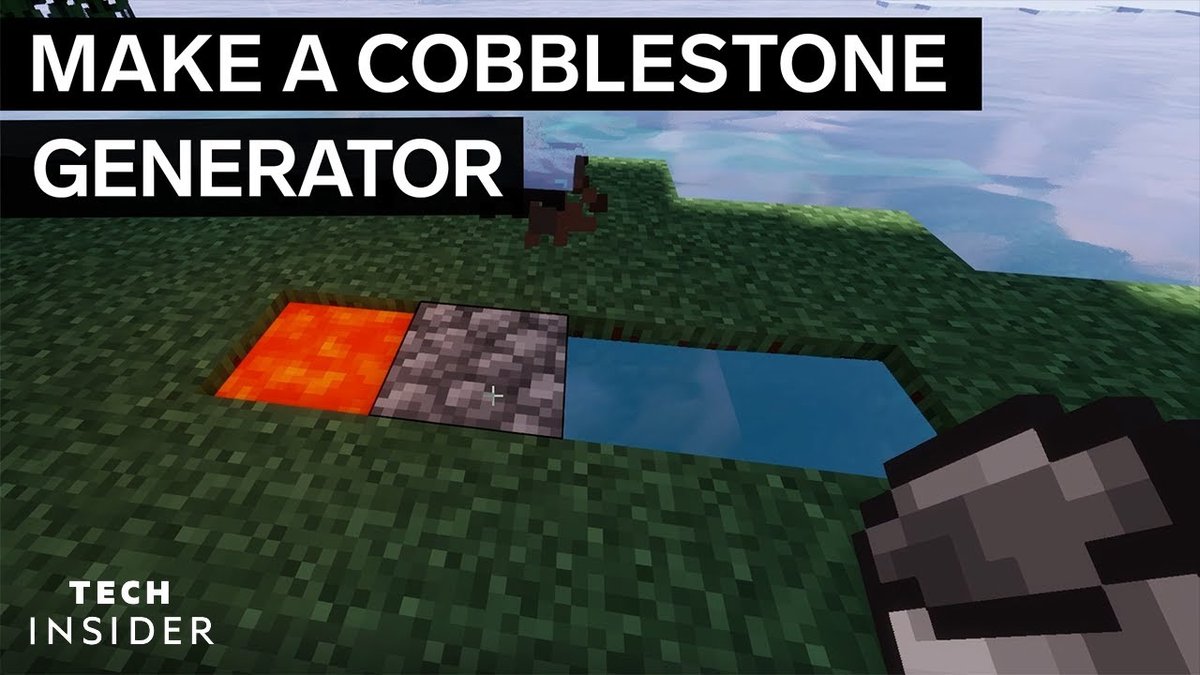
From the moment you punch your first tree in Minecraft, resources dictate your progress. But what if you could tap into an infinite, self-renewing supply of one of the game's most fundamental blocks? That's the power of integrating cobblestone generators into base builds and farms. These ingenious contraptions transform flowing lava and water into a ceaseless stream of cobblestone, or even raw stone, freeing you from the grind of repetitive mining and opening up a world of automated possibilities for construction, fuel, and trading. It's not just about getting blocks; it's about fundamentally changing how you acquire and manage resources in your world.
At a Glance: Harnessing Infinite Cobblestone
- Unlimited Resource: Generate cobblestone or stone indefinitely, eliminating the need for mining expeditions.
- Environmental Preservation: Acquire blocks without scarring your world's landscape.
- Automation Potential: Connect generators to sorting systems, auto-smelters, and storage for truly hands-free resource acquisition.
- Base & Farm Integration: Crucial for large-scale builds, sustainable fuel sources, XP farms, and villager trading.
- Scalability: From simple early-game setups to complex, high-efficiency mega-farms.
- Fuel & XP Source: Cobblestone can be smelted into stone (and then smooth stone), providing experience and a readily available fuel for other furnaces.
Why the Endless Cobblestone Stream Matters: Beyond Basic Blocks
At its core, a cobblestone generator is elegant in its simplicity: combine flowing lava with flowing water, and voilà – cobblestone. But the implications of an unlimited block supply stretch far beyond merely acquiring building materials. Think of it as your personal quarry, one that never runs dry and requires minimal upkeep once established.
Here's why you'll want one in your world:
- Massive Construction Projects: Building colossal castles, sprawling cityscapes, or extensive terraforming? You'll need tens of thousands of blocks. Manual mining is simply not sustainable or efficient for such endeavors.
- Self-Repairing Structures: Imagine walls or defenses that automatically patch themselves up after a creeper attack or a siege. While requiring advanced Redstone, a reliable cobblestone source makes this a reality.
- Resource-Scarce Maps: On Superflat worlds, Skyblock challenges, or custom maps with limited natural stone, a generator isn't just useful—it's absolutely essential for survival and progression.
- Experience Points (XP) & Fuel: Smelting cobblestone into stone (and then smooth stone) provides valuable XP. This process also consumes fuel, but the stone itself can then be used as a furnace fuel, creating a semi-renewable fuel cycle for other smelting operations.
- Villager Trading: Mason villagers often trade for stone and its variants. A steady supply from a generator can turn your base into a trading hub, accumulating emeralds without breaking a sweat (or a pickaxe).
- Environmental Stewardship: If you're keen on keeping your in-game world pristine, a generator allows you to acquire all the stone you need without ever digging an unsightly hole in your landscape.
Understanding the subtle differences in block generation is key: flowing lava over flowing water yields cobblestone, while flowing water over a still lava source creates obsidian. For stone, you need flowing lava to interact with a still water source. A pickaxe enchanted with Silk Touch will yield actual stone from a stone generator, while Fortune enchantments increase cobblestone drops.
Choosing Your Cobblestone Generator: A Design for Every Builder
Cobblestone generators come in various shapes and sizes, each offering a different balance of complexity, efficiency, and resource cost. Your choice will depend on your stage in the game, your available resources, and your specific needs.
The Foundation: Simple and Accessible Designs
These designs are perfect for beginners, early-game survival, or when space and resources are at a premium. They prioritize ease of construction and immediate utility.
Method 1: The Basic Cobblestone Faucet
This is the quintessential Skyblock generator – a simple, reliable source that provides blocks one at a time. It's the "set it and forget it" of manual block generation.
How it Works:
You create a small trench (typically 4x1x1 blocks) with a single water source at one end and a single lava source at the other. Breaking the second block from the water source allows the lava and water to meet, instantly forming cobblestone in that gap.
Materials:
- 1x Water Bucket (or 1x Ice Block)
- 1x Lava Bucket
- A few building blocks (any non-flammable material)
Best For: - Early Game: Gets you started quickly.
- Skyblock: Provides a fundamental resource for island expansion.
- Manual Mining: You stand at the generator and break blocks as they form.
Efficiency Note: This is the lowest efficiency design, requiring constant player interaction to mine each block. But for many, it's the gateway to understanding automated resource generation.
Method 2: The Popular Stone Generator with Collection
Stepping up from the basic design, this method introduces a critical feature: a built-in collection system. This means fewer lost blocks and a more organized workflow, making it a staple for many survival bases.
How it Works:
Instead of a simple gap, this design uses stairs and hoppers. Water flows over waterlogged stairs, and lava is positioned above to flow down onto the water. The generated stone (or cobblestone, depending on lava/water placement) falls into hoppers leading to chests below. This setup is often designed for generating stone directly, by having lava flow directly into a still water source.
Materials:
- 2x Water Buckets
- 1x Lava Bucket
- 5x Inflammable Stairs
- Solid Inflammable Blocks (for structure)
- 5x Hoppers
- 2x Chests (for a double chest)
- 1x Sign (to contain water)
Best For: - Mid-Game Efficiency: Reduces manual collection effort.
- Stone Generation: Easily adaptable to produce stone directly with a Silk Touch pickaxe.
- Compact Resource Hubs: Can be integrated into a starter base with direct access to storage.
If you're looking to dive deeper into the step-by-step process of building these initial generators, as well as more complex versions, you can always build your own cobblestone generator with dedicated guides that walk you through each block placement.
Scaling Up: Automated & Piston-Driven Powerhouses
For builders aiming for larger scales or minimizing manual input, pistons and Redstone are your best friends. These designs move generated blocks for easier collection or to create longer rows of blocks.
Method 3: Piston-Based Cobblestone Generators
This category introduces automation by using pistons to push newly formed cobblestone blocks into a more accessible position or to create long, continuous lines of blocks. This is particularly useful for breaking multiple blocks with a single swing or for integration into larger Redstone systems.
How it Works:
Water and lava combine to form cobblestone, but immediately after formation, a piston pushes the block. This allows more cobblestone to generate in the same spot, creating a growing line of blocks. Redstone circuitry typically controls the piston, often with a simple clock or a lever to activate/deactivate.
Materials (for one module):
- 2x Water Buckets
- 1x Lava Bucket
- 8x Pistons
- Redstone components (Torches, Repeater, Dust, Lever)
- Inflammable Stairs & Solid Blocks
Best For: - Semi-Automation: Reduces constant manual mining to a 'mining spree' when the row is full.
- Dedicated Mining Tunnels: Creates long rows of cobblestone for efficient pickaxe use.
- Modularity: Can be expanded by adding more piston lines side-by-side.
Considerations:
Piston-based generators are reliable but can be slow if not scaled up. The pushed blocks need to be manually broken unless further automation (like TNT dupers) is added. A collection system is highly recommended.
When Stone is King: Dedicated Stone Generation
While cobblestone is versatile, raw stone (often for smelting into smooth stone or for cleaner aesthetics) is also highly sought after. Stone is generated when flowing lava meets a still water source. These generators are designed specifically for this purpose.
- AFK Stone Farm: These are simpler versions that typically create a line of stone blocks that can be mined continuously. They often don't require complex Redstone but benefit from an automatic pickaxe dispensing system for truly AFK operation. The key is setting up the lava and water flow correctly to always produce stone, not cobblestone.
- Semi-automatic Stone Generator: More advanced, these can produce a significant amount of stone (e.g., 24 blocks) with a single button press. They involve dispensers for lava, precise Redstone timing (using repeaters), and often obsidian or specific mineral blocks to prevent unwanted destruction. The goal is to quickly flow lava over water, generate stone, then retract the lava, allowing for safe collection.
The Apex Predator: Fully Automated Cobblestone Generators
For the truly ambitious builder, fully automated cobblestone generators are the pinnacle of efficiency. These mega-farms can produce thousands, even tens of thousands, of blocks per hour, entirely hands-free. They typically integrate complex Redstone, TNT dupers, and sophisticated collection systems.
Method 4: Fully Automated Cobblestone Generator (TNT Duper & Etho Hopper Clock)
This is a beast of a machine, designed for ultimate throughput. It combines a generator core that pushes blocks, a TNT duper to automatically break them, and an Etho hopper clock to time the explosions perfectly.
How it Works (Simplified):
- Generator Core: Pistons continually push newly formed cobblestone blocks into a designated area.
- TNT Duper: A clever Redstone contraption repeatedly creates and drops TNT without consuming actual TNT blocks from your inventory.
- Etho Hopper Clock: A highly reliable Redstone clock, often using hoppers filled with items, provides the precise timing needed to activate the TNT duper and ensure blocks are broken efficiently.
- Collection System: A massive water stream and hopper array collect every single dropped block and route it to your storage.
Materials:
Numerous, including: Water/Lava buckets, leaves, sticky pistons, regular pistons, target blocks, observers, various Redstone components, slime blocks, TNT, fences, dead coral fans, detector rails, minecarts, fence gates, solid blocks, obsidian, levers, slabs, chests, hoppers, stairs.
Best For:
- Mega-Bases: Supplying material for truly enormous projects.
- Server Hubs: Providing resources for many players.
- Late-Game Automation: When you want to minimize all manual resource gathering.
Critical Considerations: - Complexity: These builds are highly intricate and require a solid understanding of Redstone and game mechanics.
- Malfunctions: If pistons reach their push limit (12 blocks) and aren't reset, they can push the lava source block, destroying the generator. Proper Redstone timing and fail-safes are crucial.
- Lag: High-throughput farms can generate significant lag on servers or less powerful machines due to the sheer number of block updates and item drops.
- Obsidian Protection: The collection area under the TNT often needs to be lined with obsidian to prevent damage from explosions.
Seamless Integration: Weaving Generators into Your Base & Farm Designs
Building a generator is one thing; making it a functional, central part of your base or farm ecosystem is another. This is where strategic thinking and foresight come into play.
1. Location, Location, Location
Where you place your generator significantly impacts its utility.
- Proximity to Storage: The ideal spot is near your main storage area, allowing hoppers to directly feed into chests, shulker box loaders, or item sorters.
- Adjacent to Smelting Arrays: If you're using cobblestone for fuel or smelting it into stone, positioning the generator next to your furnace bank creates an efficient workflow.
- Dedicated Utility Rooms: For larger, more complex generators, a dedicated underground or hidden room keeps the machinery out of sight and reduces noise.
- Accessible to Farms: If you're building a farm that needs large amounts of stone (e.g., guardian farms that use concrete or monument builds), place the generator or its collection system conveniently close.
- Off-Grid for Lag: For high-speed automated farms, consider building them in an unloaded chunk or a separate dimension (like the Nether, if applicable) to minimize lag on your main base, then transport items via chunk loaders and portals.
2. Resource Flow & Logistics
The true power of integration lies in automating the movement of blocks.
- Hoppers are Your Friends: Hoppers are the backbone of any collection system. Design your generator to feed directly into a line of hoppers that transport items to your central storage.
- Water Streams for Bulk Transport: For massive outputs from fully automated farms, water streams can push items across longer distances more efficiently than long lines of hoppers (which can cause lag). These then feed into a final hopper array.
- Item Sorters & Bulk Storage: Integrate your generator's output with an item sorting system to automatically separate cobblestone, stone, and other byproducts. Connect it to large, organized chest rooms or shulker box storage systems for maximum capacity.
3. Powering Your Operations: Redstone Networks
Automated generators require Redstone, but their integration into a larger base can involve more than just a simple clock.
- Master Switches: For complex Redstone farms, consider a central "master switch" that can turn multiple systems (including your generator) on or off from a convenient location.
- Pulse Extenders & Delays: Ensure your Redstone signals are timed correctly, especially for piston-based systems or TNT dupers. Repeaters and comparators are key for fine-tuning.
- Fail-Safes & Indicators: Build in Redstone indicators (e.g., lamps) to show if your generator is running or if a specific component has malfunctioned (like pistons hitting their push limit). Automatic kill switches can prevent disasters in high-output farms.
4. Aesthetics & Concealment
Even the most efficient machine can be an eyesore. Integrate generators gracefully into your base's visual design.
- Underground & Hidden: The easiest way to deal with unsightly machinery is to bury it. Many builders create vast underground utility networks for their farms.
- Architectural Integration: For smaller, manual generators, you can incorporate them into your base's walls or floors, perhaps behind a decorative facade or trapdoor.
- Utilize Output: Since the generator produces blocks, consider using those very blocks for the structure of your base or the farm itself, creating a self-sustaining architectural theme.
5. Farm Synergy: Interconnected Systems
Cobblestone generators aren't just standalone utilities; they can enhance other farms and systems.
- Fueling Smelters: A direct feed of cobblestone into a super smelter provides a continuous source of fuel (if converted to stone/charcoal) or XP (from smelting). Connect it to an automatic tree farm to produce charcoal, and then use that charcoal to smelt even more cobblestone!
- XP Farms: Smelting cobblestone for experience is a slow but steady method. Combine it with other XP-generating farms (like mob farms) for a more robust system, or use the stone output for a massive "stone wall" XP farm.
- Trading Halls: Link your stone or cobblestone output directly to a villager trading hall. Automated systems can even sort and deliver the exact number of blocks needed for trades, making your Mason villagers incredibly profitable.
- Concrete Production: If you're building with concrete, a reliable source of gravel and sand (from terraforming or specific farms) combined with dye and water, and your infinite stone supply, forms a powerful concrete factory.
Common Questions & Troubleshooting Your Cobblestone Creations
Even the most seasoned builders occasionally run into snags. Here are some common questions and quick troubleshooting tips.
Q: My simple cobblestone generator isn't making cobblestone. What's wrong?
A: Check your lava and water placement.
- Cobblestone: Flowing lava needs to meet flowing water. If lava falls onto a still water source, it makes obsidian. If water flows into a still lava source, it creates stone.
- Block Placement: Ensure there's a specific block for the cobblestone to generate into. Don't block the water or lava flow.
- Flammable Blocks: If you used wood or other flammable blocks for your generator structure, lava might have burned them away, disrupting the flow. Use non-flammable materials like stone, cobblestone, or obsidian.
Q: How do I make my generator faster?
A: - Manual Generators: You simply have to mine faster. Enchant your pickaxe with Efficiency.
- Piston Generators: Build multiple modules side-by-side, or create a longer piston push limit (up to 12 blocks).
- Automated Generators: Fully automated designs (like those with TNT dupers) are inherently the fastest, but they require significant Redstone and careful timing. Increasing the number of TNT blasts or the frequency of generation is key.
Q: Stone vs. Cobblestone: Which is better for what?
A: - Cobblestone: Easier to generate with basic setups, great for rough construction, crafting furnaces, and early game tools. It can be smelted into stone for XP and smoother aesthetics.
- Stone: Generated directly with specific setups (lava over still water), collected with a Silk Touch pickaxe. Mines slightly faster than cobblestone, looks cleaner for builds, and is the base for smooth stone, stone bricks, etc.
Decision: If you need a lot of raw material for building and don't care about aesthetics or want to smelt for XP, cobblestone is fine. If you prioritize clean builds and faster mining, stone generators are superior (especially with Silk Touch).
Q: Can I build these in the Nether or End?
A: - Nether: Water cannot be placed in the Nether (it evaporates). Therefore, traditional cobblestone generators are impossible here. You'll need to transport cobblestone/stone from the Overworld or rely on mining netherrack.
- End: Water can be placed in the End. However, lava is not naturally occurring (outside of a few specific situations with dragon fireballs or from buckets). So, while technically possible, generating lava sources can be more challenging. Most players transport resources to the End or build smaller outposts with manually supplied lava.
Beyond the Blocks: The Strategic Advantages of Infinite Resources
Integrating cobblestone generators into your Minecraft experience isn't just about obtaining a block; it's about fundamentally altering your resource economy. It's about moving from a hunter-gatherer mentality to an industrial one, where automation and infinite supplies free you to focus on larger, more creative projects.
By understanding the different types of generators and thoughtfully integrating them into your base, you gain:
- Unrivaled Efficiency: Spend less time mining and more time building, exploring, or designing.
- Sustainable Growth: Your world's natural landscape remains untouched, and your resource supply is truly renewable.
- Architectural Freedom: No longer constrained by finite stone, your grandest building dreams become achievable.
- Economic Power: Fuel your furnaces, trade with villagers, and power other Redstone contraptions without ever worrying about running out.
So, whether you're just starting out on a Skyblock island or planning the next mega-base, take the leap. Design your first generator, optimize its output, and seamlessly weave it into the fabric of your world. You'll quickly discover that the infinite flow of cobblestone is one of the most empowering features in all of Minecraft.